Context
In 2019, I worked on a service design project for a large warehouse housing an internal IT department. Their team was responsible for receiving, setting up, shipping, and repairing iPads and laptops for franchisees. The organisation suspected some stock had gone missing but was concerned that introducing tracking software might make staff feel monitored. My role was to explore how a digital solution could be integrated into their workflow without disrupting trust or efficiency.
Design Challenges
- Misalignment between stakeholder assumptions and actual user environments (e.g., expecting a web-only solution without considering the physical distance between workstations and computers).
- Manual tracking via spreadsheets was inconsistent and lacked visibility across workstations.
- High sensitivity around monitoring, with a risk of staff feeling distrusted.
- Lack of technical understanding around integrating barcode scanning into the service flow.
Approach
Understanding the space
- Conducted on-site visits to observe how users worked within their physical environments.
- Built trust with staff by clearly communicating the goal of improving their experience.
Research
- Usability testing of early prototypes, with continued testing throughout development.
- User interviews (formal and informal), observations, and co-creation sessions.
Collaboration and buy-in from day one
- Shared user journey maps and facilitated service walkthroughs to explain real user needs.
- Co-hosted workshops to explore how barcode scanning could be implemented effectively.
- Supported scrum master and developers, including inviting them to usability sessions to observe real-world use.
Outcomes
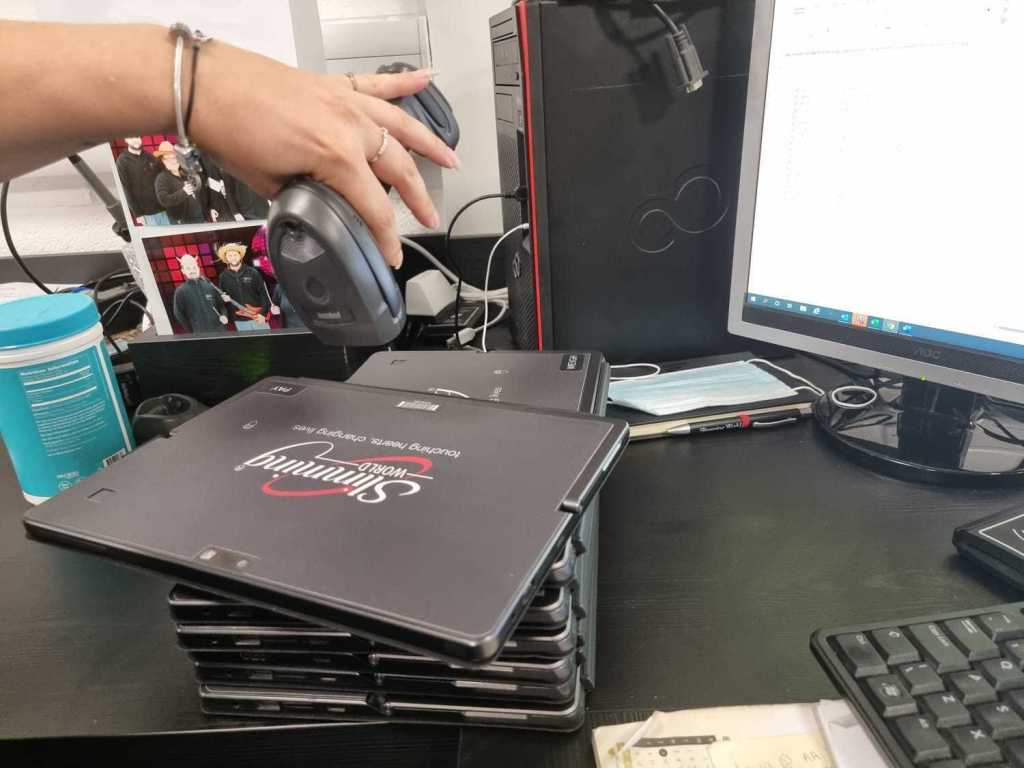
- Delivered a barcode-based check-in/check-out system that matched the physical flow of equipment between workstations.
- Alleviated stakeholder concerns by demonstrating how user involvement improved both trust and accuracy.
- Strengthened the relationship between users and the organisation by co-designing a tool that genuinely supported their workflow.
- Improved visibility and accountability of equipment movement, reducing the likelihood of future losses.
I worked very closely with the development team on this project because it was the first time I’d worked with barcode scanners, and I wanted to learn more. Once I presented the user journey map to the developers along with high level ideas, we worked together on what was technically feasible and filled in the details.
“Hey Naomi, We are getting on really well with it. We have managed to keep track of the devices as well as logging all repairs so its a big thumbs up from us
x”
The project was released on time and we received wonderful feedback from both the business and the users.
Key Learnings
Never underestimate the importance of seeing the user environment firsthand—context drives smarter design decisions.
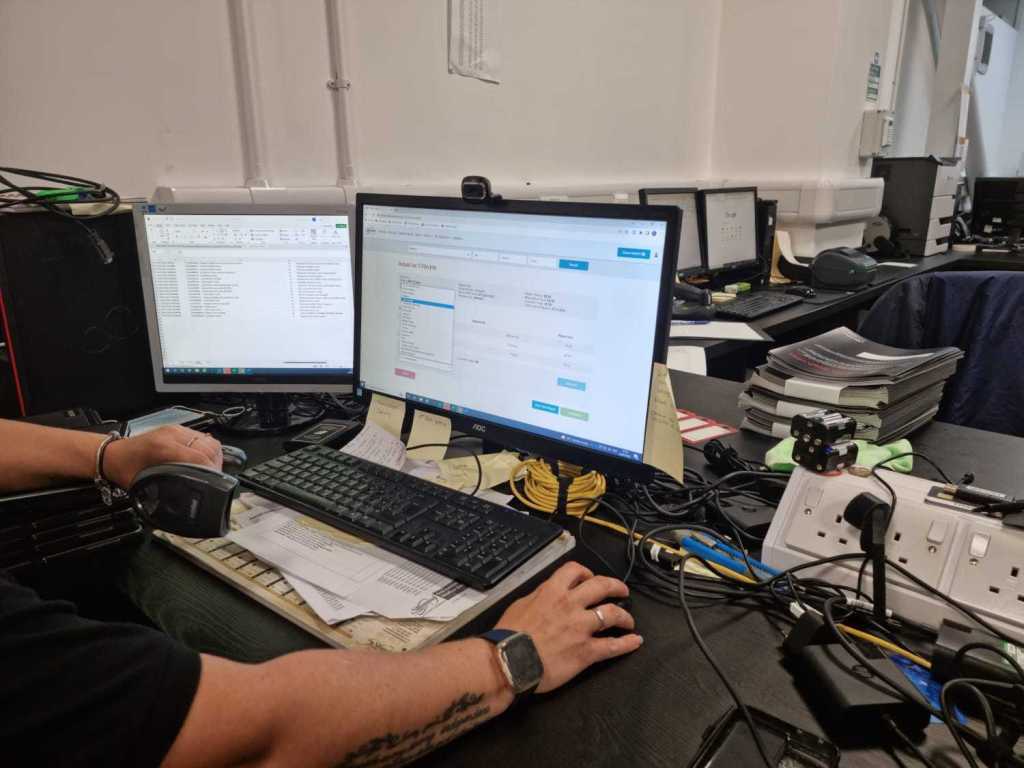
I was able to visit the warehouse and see the working environment, but developers and stakeholders were not. Early and close collaboration allowed me to see where they were struggling to understand, and create service walkthroughs and diagrams to show the layout of the warehouse. Inviting developers into the process early helped us to all learn more about barcode technology together for the best outcomes.
 Naomi Parker