This case study focuses on a bespoke software solution I designed for a franchise call centre that handled a high volume of daily calls, emails, and letters. When I first visited, they were using a dated, off-the-shelf web system to manage incoming queries.
Through contextual observation, it quickly became clear that the existing system was no longer fit for purpose. It significantly slowed down staff, reduced efficiency, and impacted morale. Critical cases were often missed when passed between departments, occasionally leading to missed payments.
Design Challenge
The challenge was to replace an unsupported, inefficient system with a custom-built solution tailored to the needs of frontline and back-office staff.
The new system needed to:
- Improve speed and usability
- Surface critical information clearly
- Support seamless case management from department to department
- Maintain all existing functionality from day one
Because the legacy system was failing, we couldn’t gradually phase in the new basic product – we needed a Minimum Viable Product that was fully viable from the outset.
My Role
As one of the first UCD (User-Centred Design) team members in this B2B area, I partnered closely with the Product Owner and introduced her to the GDS framework.
I was the sole Service Designer, Researcher, and UX/UI Designer throughout the full product lifecycle. My responsibilities included:
- Uncovering the needs of the variety of users via research and contextual observations
- Facilitating discovery workshops and co-creation sessions
- Conducting service walkthroughs
- Creating and iterating wireframes
- Leading usability testing
- Advocating for UX practices across this area of the business
I was embedded in the development team to stay closely aligned, and was even asked to take on the role of Scrum Master to support smooth Agile delivery.
Approach
Understanding
I began by shadowing staff on-site as they took calls and logged cases. I followed cases through to other departments – including IT and Finance – whose actions were often triggered downstream. Capturing these varied needs was key.
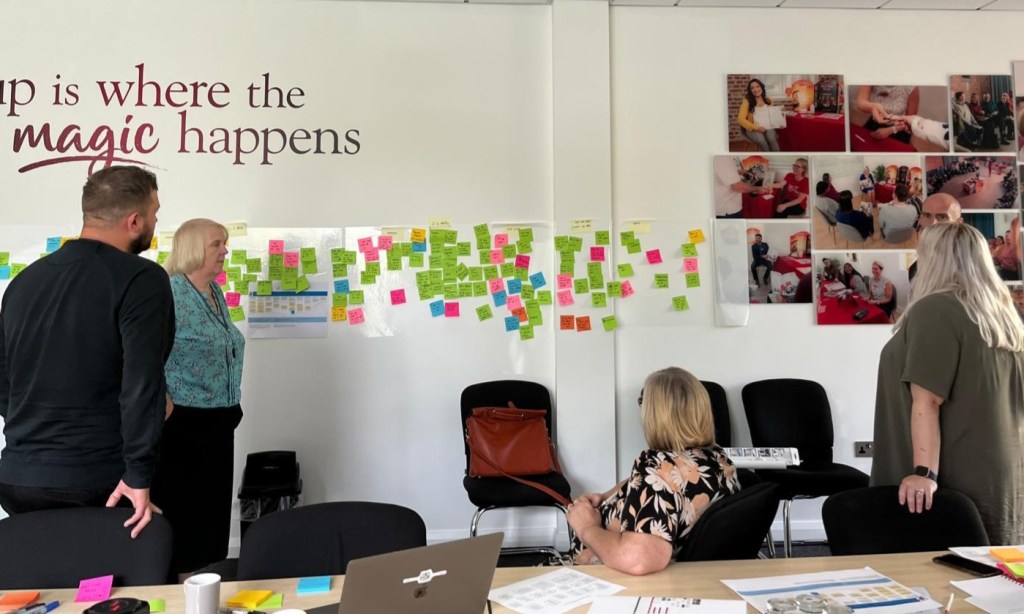
I got to know the people behind the roles and created personas to reflect their goals and pain points. Workshops were held to validate observations, identify friction points, and define core user needs.
Exploration
Through co-creation workshops, we translated insights into early concepts. “How might we” questions led to rough wireframes, which we iterated on rapidly, often via paper to speed up input from those less tech savvy.
We also ran card-sorting exercises to identify which information needed to be surfaced first. One delightful, user-led feature that emerged was a birthday banner—staff loved the idea of being able to wish callers a happy birthday, adding a thoughtful human touch to each interaction.
Design & Delivery
The final solution was a centralised hub where franchisee information and case details were clearly surfaced. Users could easily:
- Create and track cases
- Assign and reassign as needed
- Tick off actions and pass actions on
- Categorise them for reporting, observe turnaround times and surface historic issues
- A basic admin system so that edit levels could be created per role
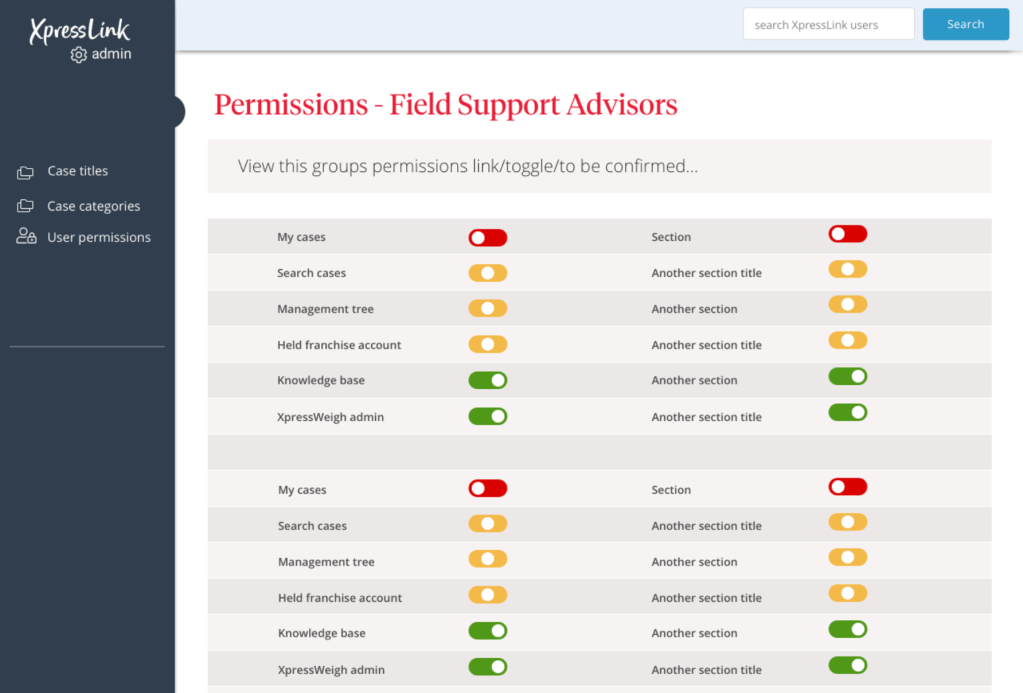
We worked in Agile sprints with continuous feedback loops. I ran regular usability testing, with the entire team – including developers, testers, and the Product Owner – taking turns to observe and note-take for me. Insights were fed directly into the next sprint’s work, driving meaningful iteration.
Outcome
The result was a tailored, intuitive system that transformed how staff worked. It significantly boosted speed and productivity, and eliminated issues of lost or mishandled cases across departments.
We received consistently positive feedback from staff, managers, and even customers how noticed that responses were much quicker.
One comment captured the general sentiment:
“I love it! It’s all just so straightforward – I’m just thinking about how much more efficient it will make us!”
The users were genuinely happy, and I thoroughly enjoyed being involved end-to-end. It was incredibly rewarding to work so closely with the people using the product every day and to help make their working lives noticeably easier.
Learnings
“We don’t need a faster car”. The business had already looked into buying off-the-shelf software and the initial discovery was left open. However, it soon became clear that a bespoke system would be much more efficient. Being involved in early conversations helped to shed light on the unique system we would need to create.
This was the first time I got so many developers to take part in usability testing, and it was great. They got so much value in seeing people using their system and because they had been so involved and open to iterating, I delivered them a ‘thank you’ card and pizza from the call centre at go live.
Off the back of this project I was also asked to present our learnings to the community of developers and to create a plan for training future junior designers and developers to work more collaboratively.
 Naomi Parker