The bereavement team had previously had an agency in for a small time to create a future vision, however this hadn’t been based on any research, and the team was left with some ideas but no idea how to move forward. We offered our help.
The existing bereavement process was paper-based, slow, and disjointed. We heard anecdotal stories about cases that went on for 6 months or more, but we did not know why. We quickly found out that issues within bereavements were causing huge levels of upheld complaints, compensation and high call volumes.
To add to this, we also knew that the bereavement service works with the highest amount of vulnerable clients at HL. I was keen to get involved and assist where I could!
Design Challenge
To understand the ‘as is’ bereavement service and all of the current issues from both a client and colleague perspective. Use these learnings to imagine a future service!
Once we knew where things were, we would use this knowledge to create a modern future service which truly supported people at this potentially emotional time.
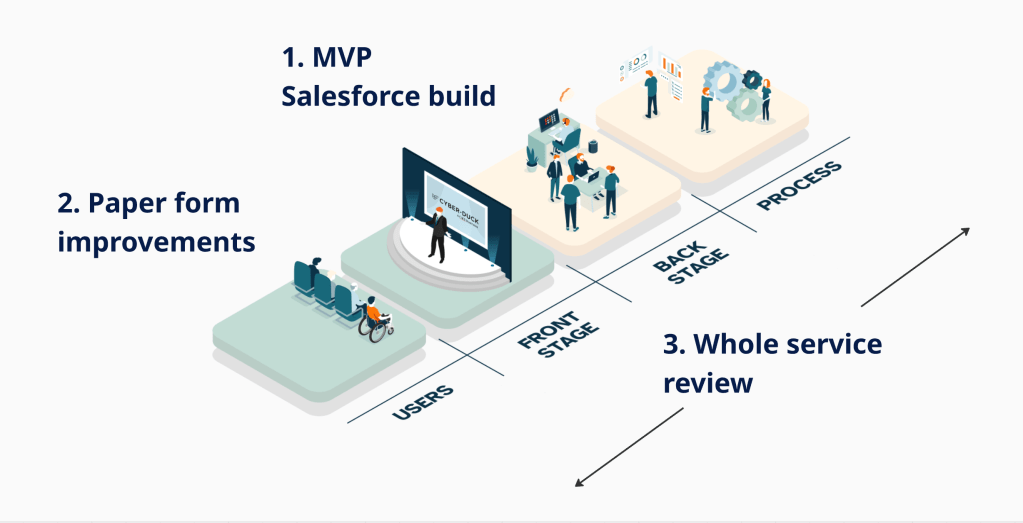
We created a plan to work tactically and strategically, and tie everything together.
My Role
- Led the discovery to uncover the true state of the ‘as is’ service
- Provided clarity, structure, and actionable insights after a challenging engagement with the previous consultants
- Conducted ‘as-is’ discovery and created artefacts to align the team around the current user journey
- Facilitated workshops and sessions to explore and prioritise future state opportunities
- Kicked off the online notification of death project, gathering design requirements and coordinating early technical investigations
- Supported the bereavement team whilst colleagues moved over the Salesforce and reshaped how case tracking worked
Approach
Understanding the space
I started by immersing myself in the problem — shadowing the different roles within the bereavement department, watching them work. Finding out what enabled them but most importantly, what slowed them down.
We uncovered a vast amount of client feedback from this space, alongside call data, complaints data we also spent time immersed in call listening, to get to know our clients better. We also spoke with bereavement charities to learn more about the sorts of help and support bereaved people need at this time.
Making it visible
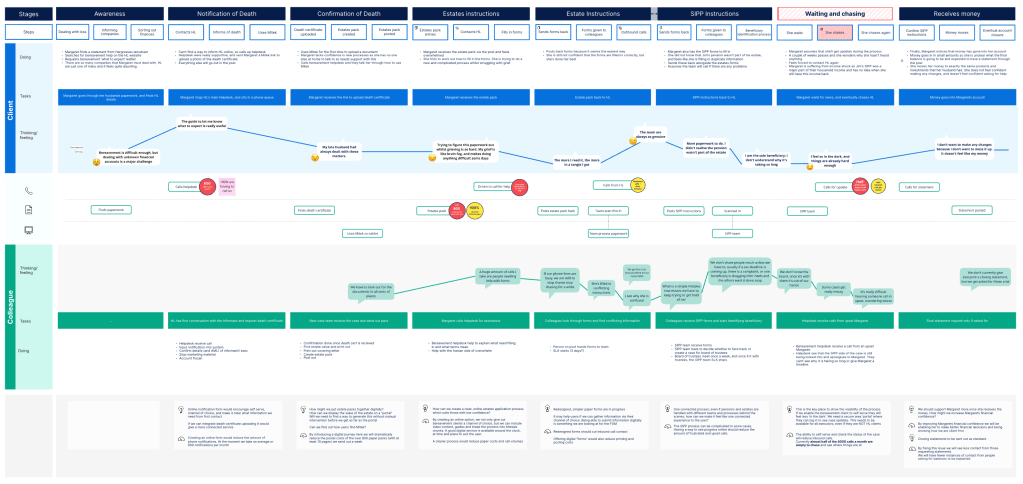
I created early visuals to explain the mindset of a bereavement client, and what else they are having to deal with whilst sorting out an estate. I created colleague archetypes to explain the needs each role had in order to work at their best. I created a shared experience map to highlight the main call drivers, friction points and opportunities of the ‘as is’ service.
Designing the future
By looking at both colleague and client journeys together, we could zoom out and see the service overall, and then focus on both the tactical fixes and redesigning the end to end service.
Examples of support on tactical improvements included:
- The improvement of the confusing paper estates forms, and a simple online form for notifying us early.
- Clearer wording to explain why accounts of the deceased were frozen until executors had been confirmed.
By addressing these tactical improvements early on, we were able to show impact early with the drop of inbound calls.
We then moved into elaboration to redesign the end to end future service.
Outcomes
- Achieved a shared understanding across the team of the current bereavement journey, including client pain points, expectations, and internal frustrations
- Created alignment across the team, enabling them to move forward with greater confidence and clarity
- Uncovered tactical fixes which could be made to the service whilst we worked on the strategic service transformation. Supported key fixes through to delivery
- Produced initial design ideas for an online notifications form and initiated a proof of concept for Salesforce AI agent
- Supported the team as they moved case management over to Salesforce. Provided usability guidance to engineering teams
- Designed concept user flows and rough prototypes for how a digital bereavement service could work. *more information coming soon*
Key Learnings
Primary research in the bereavement space is very difficult to get signed off, and for good reason. It is an extremely sensitive topic! If we asked service users a year or two down the line there was a good chance that they would not remember the process of accessing their inheritance when it was overshadowed by the strong emotions of the time. We reached out to Cruise UK and Dementia UK for their advice, and this proved very valuable.
 Naomi Parker